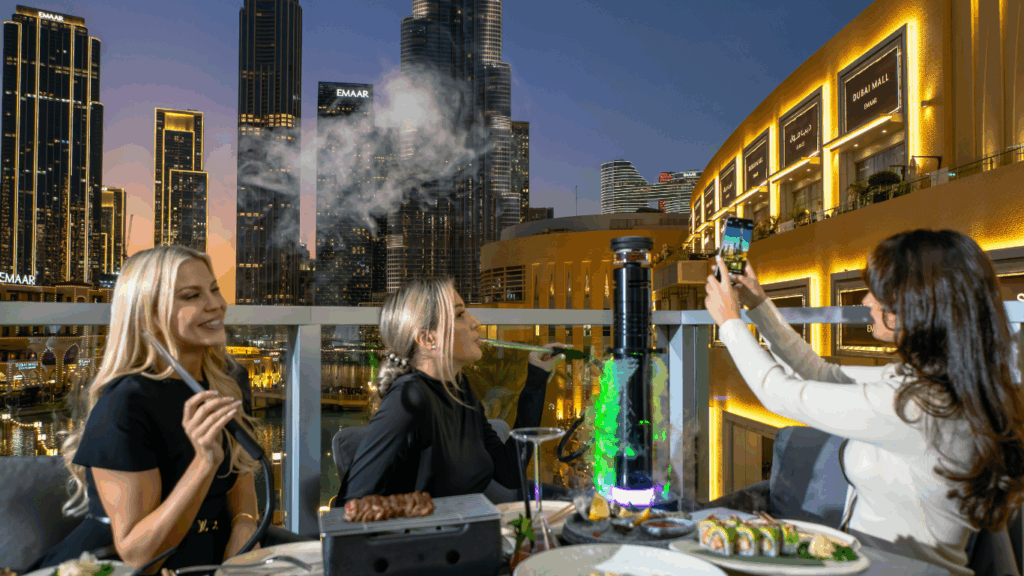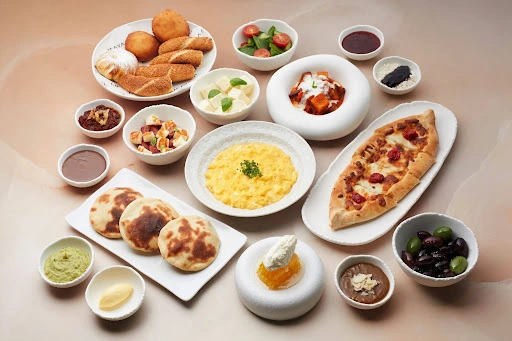
A proper Turkish breakfast in Dubai is not a plate. It is a table covered edge to edge, served serpme style, with more than twenty small dishes arriving at once and tea that keeps coming back. AMAYA serves it on the first floor of The Dubai Mall, on the Waterfalls side, with the Burj Khalifa in front of the terrace.
Kahvaltı is built to be slow. Nobody eats it in fifteen minutes, and nobody is meant to. You share it, you talk over it, and you finish when the tea does.
Reserve on WhatsApp if you want the terrace. The rest of this page walks through the spread, the dishes, and the tea ritual that goes with them, so you can judge for yourself whether this is the best Turkish breakfast in Dubai for the morning you have in mind.
What’s in a Traditional Turkish Breakfast (the Serpme Spread)
Serpme means scattered, and it describes how the food arrives. Everything lands together, in small dishes, and you build each mouthful yourself.
The cheeses come first in most people’s minds. Beyaz peynir is the fresh white cheese most tables start with, salty and firm. Tulum is sharper and aged in a skin, which gives it a much stronger edge. Kashar is milder and yellow, and is the one children usually reach for. Between them, you get a proper range rather than one cheese doing all the work.
Around the cheeses sit the items that make the table recognisable. Olives, green and black, cured rather than sweetened. Kaymak, the thick clotted cream, eaten with honey and nothing else. Tahini and pekmez stirred together into a dark, nutty paste that goes on bread. Jams, tomatoes, cucumbers, and simit, the sesame bread ring that belongs on every Turkish breakfast table.
Bread ties the whole spread together. Fresh bread arrives through the meal rather than in one basket at the start, because the dishes are designed to be eaten on it. That is the difference between a Turkish breakfast spread and a continental one. Nothing here is a single portion with a garnish.
Counted properly, there are more than twenty Turkish breakfast items on the table. The point is not the number; it is that you never eat the same combination twice in one sitting.
There is no correct order, and that catches people out the first time. You are not working through courses. You put a little cheese on bread, add a spoon of jam or a slice of tomato, eat it, and start again with something else. Some people build every mouthful differently. Others find one combination early and stay with it. Both are normal.
Signature Turkish Breakfast Dishes at AMAYA
The cold spread is only half of it. A few hot dishes come out of the kitchen alongside, and these are the ones people come back for.
Menemen arrives in a copper pan, still moving. Eggs are cooked slowly with tomato, green pepper and a little chilli, kept soft rather than set hard, and eaten straight from the pan with bread. It is the dish most Turkish families argue about, usually over whether onions belong in it.
Sucuklu yumurta pairs eggs with sucuk, the spiced beef sausage that releases its own fat into the pan and flavours everything it touches. Börek comes in several varieties, layered pastry rolled or folded around cheese or meat and baked until the sheets separate. Gözleme is thinner, hand-rolled and cooked flat on a griddle, closer to a filled flatbread.
There is also a Turkish take on eggs benedict, which sits somewhere between the two traditions and gives the Turkish breakfast menu a familiar entry point for anyone new to it.
Timing matters with the hot plates. They come out through the meal rather than all at the start, so the table never sits still, and nothing goes cold while you are working through the cheeses. If you want one dish before the others, say so when you order, and the kitchen will send it first.
Order across the hot and cold sides rather than choosing between them. The spread is designed so the hot dishes cut through the cheeses and preserves.
The Turkish Tea & Coffee Ritual
Drinks are not an afterthought here. They set the pace of the whole meal.
Tea is brewed in a çaydanlık, the stacked double teapot. Water boils in the lower pot while a strong brew sits in the upper one, and each glass is poured from both, so you decide how strong you want it. It is served in tulip glasses, clear and narrow-waisted, held by the rim rather than the middle. Refills keep arriving through the meal, which is why kahvaltı runs long.
Turkish coffee in Dubai is often a machine drink poured into a mug, which is a different thing entirely. Done properly, it is its own ritual, and it comes at the end of the meal rather than the start. It is ground to a fine powder, brewed slowly in a cezve until it foams, and served unfiltered in a small cup with a glass of water beside it. UNESCO added Turkish coffee culture to its Representative List of the Intangible Cultural Heritage of Humanity in 2013, and the UNESCO listing is worth reading if you want to understand why the serving matters as much as the brewing. That recognition is a useful signal for anyone judging whether a place is doing this properly. Coffee made in a machine and poured into a mug is a different drink.
There is a rhythm to it that is worth knowing before you sit down. Tea runs the whole way through, coffee closes the meal, and the gap between the two is where most of the conversation happens. Rushing that part is the one way to get this meal wrong.
If you would rather not drink either, the wider list of drinks and mocktails runs alongside the breakfast menu. Most tables end up ordering tea anyway.
Turkish Breakfast in Dubai Mall: Where to Find Us
Location matters more than usual for a meal this long. You want to be able to walk out into something rather than back into a car park.
AMAYA is on the first floor of The Dubai Mall, Waterfalls side, in Downtown Dubai. The indoor room faces the mall waterfalls, and the terrace faces the Burj Khalifa with the Dubai Fountain lake below it. Coming by metro, the Burj Khalifa / Dubai Mall station connects via a covered walkway; then it is one level up.
That position makes the meal easy to build a day around. Eat first, then shop, or come off the promenade after a walk and sit for two hours. Anyone searching for Turkish breakfast in Dubai Mall is usually already in the building, and the answer is one floor above the main run of traffic. If the outlook is the deciding factor, our restaurant with fountain views page shows what the terrace actually sees.
For the shorter, lighter morning menu, our breakfast in Dubai page covers what else is served in the same room. The Turkish spread is the slower option of the two.
Recreating Turkish Breakfast at Home
A Turkish breakfast at home is more shopping than cooking, which is why most Turkish breakfast recipes are really shopping lists. Buy beyaz peynir and one aged cheese, good olives, honey, a jar of tahini and one of pekmez, tomatoes, cucumbers, and as much fresh bread as you think you need, then double it. Put everything out in small dishes at the same time rather than in courses, brew tea properly in a stacked pot, and keep pouring. The only hard part is menemen, which needs low heat and patience. Or let us do it properly and bring the pans out for you.
Why Have Turkish Breakfast at AMAYA
There are a few reasons this one is worth the trip rather than the nearest café. They are worth stating plainly.
- Serpme done properly. Everything arrives together, in small dishes, the way it is served in Turkey.
- More than twenty items. Cheeses, olives, kaymak, honey, tahini and pekmez, simit, jams and fresh bread.
- Hot dishes cooked to order. Menemen in copper pans, sucuklu yumurta, börek and gözleme.
- The tea ritual. Brewed in a çaydanlık and served in tulip glasses, with refills through the meal.
- The outlook. The Burj Khalifa from the terrace and the mall waterfalls from indoors.
Put together, that is a long, slow table rather than a quick plate. Reserving on WhatsApp takes a minute and gets you the seat you want.
Who This Suits, and When to Leave It
This is a specific kind of meal, and it is not right for every morning. Being honest about that saves everyone a bad visit.
It suits you if you are eating with at least one other person, you have two hours, and you like the idea of grazing rather than finishing a plate. It works well for a family morning, a long catch-up, or a first taste of kahvaltı for someone who has never had it. Anyone comparing the best Turkish breakfast in Dubai should judge it on the spread and the tea rather than on speed.
Leave it alone if you are on your own and only mildly hungry, because a serpme spread for one is a lot of food and misses the point. Skip it if you are eating in half an hour. If you want eggs, toast, and coffee and nothing more, the standard breakfast menu in the same room is the better call, and a weekend brunch is a different format again.
The format is the deciding factor, not the kitchen. Turkish breakfast in Dubai rewards people who have time and disappoints people who do not.
Pull Up a Chair and Let the Table Fill
Kahvaltı is one of the few meals that is better the longer it takes. Reserve a table on WhatsApp and say whether you want the terrace or the indoor room, since the two look at completely different things. You can also contact us beforehand with any questions about the spread.
Frequently Asked Questions
It is a shared spread rather than a single plate, served serpme style so everything arrives at once. A traditional Turkish breakfast covers cheeses, olives, kaymak, honey, jams, tahini and pekmez, tomatoes, cucumbers, simit and fresh bread, usually with hot egg dishes alongside and tea throughout.
AMAYA serves it on the first floor of The Dubai Mall, on the Waterfalls side in Downtown Dubai. Coming by metro, the Burj Khalifa / Dubai Mall station links by a covered walkway, and you go up one level. It is an easy walk from the promenade.
Largely, yes. The cold spread is almost entirely vegetarian, built on cheeses, olives, preserves, vegetables, and bread. The meat sits in specific hot dishes such as sucuklu yumurta, so a vegetarian table can simply order around them. Tell the team when you order, and they will keep the spread meat-free.
Two or more works best. The whole point is variety across the table, and a supreme spread for one person means eating a lot of the same thing. Larger groups get the most out of it, because everyone can pick differently from the same set of dishes.
It works well for families. Kashar is the mildest cheese and the one children usually go for, and bread, honey, jams, and eggs cover most tastes without anything unfamiliar. The shared format also means nobody has to commit to a plate they will not finish.
Tea is the drink of the meal itself, brewed in a stacked pot and poured into tulip glasses with refills throughout. Turkish coffee comes at the end, brewed in a cezve and served unfiltered in a small cup with water. Ordering both, in that order, is the normal way to do it.